
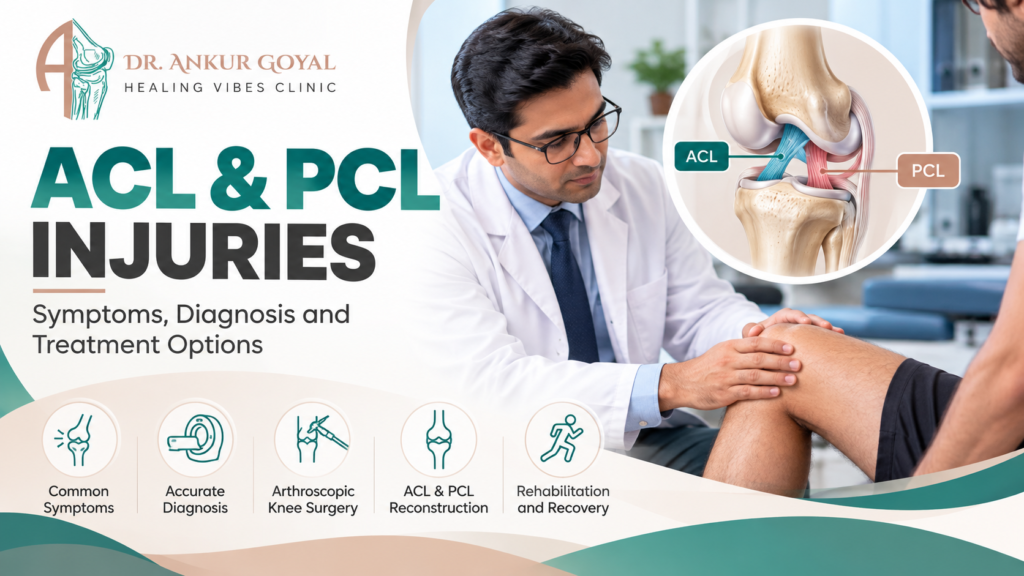
ACL and PCL Injuries: Symptoms, Diagnosis and Treatment Options
Knee ligament injuries can affect walking, running, sports performance and everyday activities. The anterior cruciate ligament (ACL) and posterior cruciate ligament (PCL) are two important ligaments that help stabilise the knee joint. Damage to these ligaments may cause pain, swelling and a feeling that the knee is unstable.
If you experience knee pain after a sports injury, sudden twisting movement or accident, an orthopaedic assessment can help identify the problem. Understanding the available treatment options, including rehabilitation and arthroscopic surgery, is an important step towards recovery.
What Are ACL and PCL Knee Ligament Injuries?
The ACL helps control forward movement and rotation of the knee, while the PCL helps prevent excessive backward movement of the shinbone.
An ACL injury commonly occurs during sudden direction changes, pivoting, awkward landings or contact sports. A PCL injury may result from a direct impact to the front of the shin or other significant knee trauma.
Both ligaments can sustain partial or complete tears. Treatment depends on the severity of the injury, knee stability, associated damage and the patient’s activity requirements.
What Are the Symptoms of ACL and PCL Tears?
Common symptoms of knee ligament injuries include:
- Pain following a knee injury
- Swelling around the knee
- Difficulty bending or straightening the leg
- A feeling that the knee may give way
- Difficulty changing direction while walking or playing sports
- Reduced confidence when climbing stairs or exercising
An ACL tear may produce a popping sensation at the time of injury, although this alone cannot confirm the diagnosis. PCL injuries may cause pain, swelling and difficulty with certain movements.
If you experience severe pain, major swelling, visible deformity or an inability to bear weight, seek prompt medical assessment.
How Are ACL and PCL Injuries Diagnosed?
An orthopaedic specialist reviews your symptoms, medical history and the circumstances of the injury. A physical examination helps assess knee movement and ligament stability.
Depending on the findings, investigations may include:
- X-rays to evaluate possible bone injuries
- MRI scans to assess ligament damage
- Examination for associated meniscus or cartilage injuries
An accurate diagnosis helps determine whether non-surgical treatment, rehabilitation or ligament reconstruction may be appropriate.
What Are the Treatment Options for ACL and PCL Injuries?
Treatment is individualised according to the injury, activity level, knee stability and associated conditions.
1. Non-Surgical Treatment and Rehabilitation
Some partial ligament tears and selected PCL injuries can be managed without surgery. A treatment plan may include activity modification, appropriate bracing, prescribed pain management and physiotherapy.
Rehabilitation focuses on improving knee movement, muscle strength, balance and functional stability. Your doctor and physiotherapist can guide you on when to progress to more demanding activities.
2. Arthroscopic Knee Surgery
Arthroscopy is a minimally invasive technique that uses a small camera and specialised instruments to examine and treat problems inside a joint.
In selected patients, arthroscopic techniques may be used for ACL reconstruction and certain other knee procedures. If you are researching arthroscopic knee surgery in GK, it is important to understand the surgeon’s relevant experience, the proposed procedure and the rehabilitation plan.
You can explore the Arthroscopy and Sports Injury Treatment services available on Dr. Ankur Goyal’s website.
3. ACL and PCL Reconstruction
Ligament reconstruction may be recommended when significant instability persists, particularly in active patients or those with associated knee injuries. The damaged ligament is reconstructed using an appropriate graft.
ACL and PCL reconstruction are different procedures. Not every ligament tear requires surgery, and the decision should follow an individual clinical assessment.
Patients looking for an orthopedic doctor for PCL reconstruction or a trusted ACL reconstruction surgeon should discuss the available surgical options, potential complications and expected recovery with a qualified orthopaedic specialist.
How Long Does Recovery Take After Ligament Reconstruction?
Recovery varies according to the ligament involved, the surgical technique, associated injuries and the patient’s overall health.
Rehabilitation commonly progresses through stages:
- Managing pain and swelling
- Restoring knee movement
- Building muscle strength
- Improving balance and stability
- Gradually returning to daily activities and sport-specific movements
Returning to sports may take several months or longer. Clearance should depend on clinical assessment, strength, stability and functional testing rather than time alone.
Following the prescribed rehabilitation programme and attending follow-up appointments are important for recovery.
Choosing an Orthopaedic Surgeon for Knee Ligament Treatment in Delhi
When searching for an orthopedic surgeon in GK 2 or an orthopedic doctor in GK, consider the doctor’s qualifications, experience with knee ligament injuries, diagnostic approach and access to rehabilitation support.
Patients in Greater Kailash and surrounding South Delhi neighbourhoods can research specialist services and confirm the clinic’s location before booking an appointment. Search phrases such as “best PCL reconstruction doctor in Greater Kailash” should lead patients to verify relevant experience and treatment options rather than rely on rankings alone.
Dr. Ankur Goyal’s website lists expertise in orthopaedics, sports injuries, arthroscopy and joint replacement. Visit the orthopaedic services page to explore the services listed.
For patients whose knee pain is related to advanced joint damage rather than an isolated ligament injury, knee replacement treatment may be relevant. Knee replacement and ligament reconstruction address different problems, so the correct treatment depends on the diagnosis.
Frequently Asked Questions
Can an ACL tear heal without surgery?
Some ACL injuries can be managed with rehabilitation and activity modification. Surgery may be considered when significant instability persists or when the patient’s activity requirements and associated injuries make reconstruction appropriate.
Does every PCL tear require reconstruction?
No. Some isolated PCL injuries respond to non-surgical management and rehabilitation. Severe injuries or injuries involving multiple ligaments may require surgical evaluation.
What is arthroscopic knee surgery?
Arthroscopic knee surgery uses a camera and specialised instruments inserted through small incisions to diagnose or treat certain joint problems, including selected ligament and meniscus injuries.
When can I return to sports after ACL reconstruction?
Return to sports depends on healing, strength, knee stability and functional testing. Follow your surgeon’s and physiotherapist’s guidance before resuming high-impact activities.
Which specialist should I consult for an ACL or PCL injury?
An orthopaedic surgeon with relevant experience in knee ligament and sports injuries can assess the injury and discuss suitable treatment options.
Conclusion
ACL and PCL injuries can affect knee stability and daily activities, but treatment options are available according to the type and severity of the injury. Early assessment can help establish an appropriate treatment and rehabilitation plan.
If you have persistent knee pain or instability after an injury, consult a qualified orthopaedic specialist to discuss your options.
This article is for general educational purposes and does not replace an individual medical consultation.