
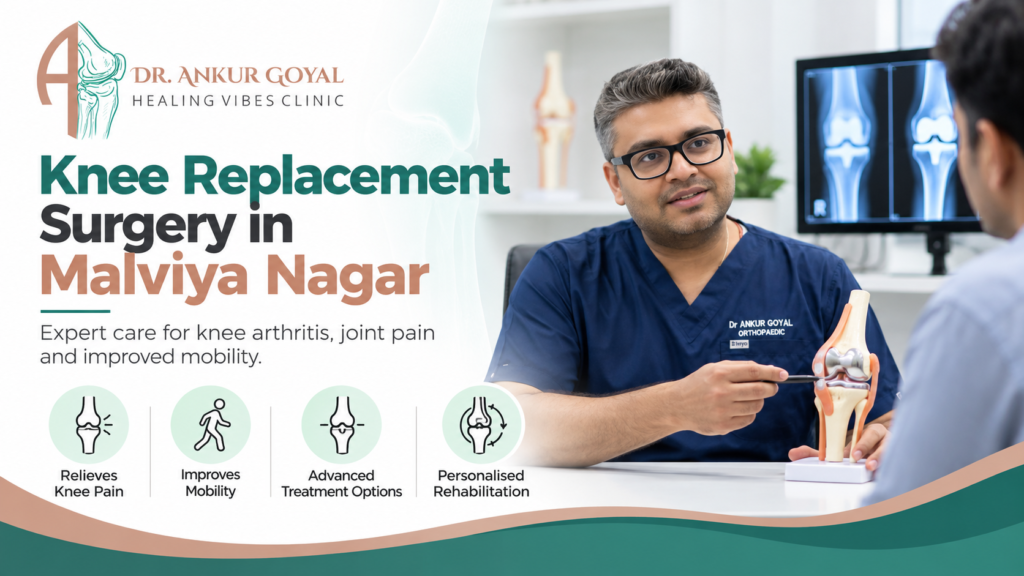
Knee Replacement Surgery in Malviya Nagar
Persistent knee pain can affect walking, climbing stairs, sleeping comfortably, and performing everyday activities. For people living with advanced knee arthritis, knee replacement surgery may be an option when other treatments no longer provide sufficient relief.
If you are researching knee replacement surgery in Malviya Nagar, understanding the causes of knee pain, available treatment options, surgical evaluation, and recovery process can help you prepare for an informed discussion with an orthopaedic specialist.
Dr. Ankur Goyal specialises in knee and hip replacement, sports injuries, arthroscopy, and trauma care. His website provides further information about his orthopaedic services and appointment enquiries.
What Is Knee Replacement Surgery?
Knee replacement surgery is a procedure in which damaged joint surfaces are replaced with artificial components. It is generally considered for people with significant knee damage, commonly caused by osteoarthritis.
The main goals are to reduce pain, improve joint function, and make everyday movement easier. The results and recovery experience vary depending on the patient’s health, the condition of the joint, and rehabilitation progress.
Knee replacement is not necessary for everyone with knee pain. An orthopaedic assessment helps determine whether surgery is appropriate.
When Should You Consider Knee Replacement?
A specialist may discuss knee replacement when knee symptoms significantly affect quality of life and non-surgical treatments have not provided adequate relief.
Common symptoms include:
- Persistent knee pain during walking or standing.
- Stiffness that limits bending or straightening the knee.
- Difficulty climbing stairs or getting up from a chair.
- Reduced ability to perform daily activities.
- Knee pain that continues despite appropriate conservative treatment.
These symptoms can have several causes. A clinical examination and appropriate investigations are needed before deciding on treatment.
Common Causes of Knee Joint Damage
Knee Osteoarthritis
Osteoarthritis causes gradual changes in the joint, which can lead to pain, stiffness, and reduced movement. In advanced cases, damaged joint surfaces may significantly affect mobility.
Previous Knee Injuries
Certain fractures, ligament injuries, and other forms of joint damage may contribute to long-term knee problems. The appropriate treatment depends on the injury and the extent of joint damage.
Age-Related Joint Changes
Knee problems become more common with age, although age alone does not determine whether someone needs surgery. Symptoms, examination findings, activity levels, and overall health all matter.
What Happens During a Knee Replacement Assessment?
A knee replacement assessment usually includes a review of symptoms, medical history, physical examination, and relevant imaging.
The orthopaedic specialist may evaluate:
- The location and severity of pain.
- Knee alignment and range of motion.
- Walking ability and joint stability.
- X-rays or other investigations when indicated.
- Previous treatments and their effectiveness.
- Medical conditions that could affect surgery or recovery.
This assessment helps the doctor discuss whether continued non-surgical treatment, further investigation, or surgery is the most appropriate next step.
Can Knee Pain Be Treated Without Surgery?
Yes. Many people can manage knee pain without knee replacement, depending on the underlying cause and severity.
Non-surgical options may include:
- Physiotherapy and strengthening exercises.
- Activity modification and low-impact exercise.
- Weight management when appropriate.
- Pain-relief medication prescribed according to individual needs.
- Selected injections when clinically indicated.
These treatments may help reduce symptoms and maintain function. A specialist can explain their likely benefits and limitations for your condition.
Types of Knee Replacement Surgery
The type of surgery depends on which parts of the knee are damaged.
Total knee replacement: Damaged joint surfaces are replaced when disease affects multiple parts of the knee.
Partial knee replacement: Only the affected compartment is replaced in selected patients whose joint damage and other clinical factors make this approach suitable.
Your orthopaedic surgeon can explain which option, if any, fits your diagnosis and treatment goals.
How Can You Prepare for Knee Replacement Surgery?
Preparation may include a medical assessment, review of medications, management of existing health conditions, and planning for assistance at home.
Your healthcare team may also recommend suitable exercises before surgery. Improving strength and mobility where possible can support rehabilitation.
Before the procedure, ask your surgeon about the expected benefits, potential complications, anaesthesia, hospital stay, rehabilitation plan, and follow-up appointments.
What Is Recovery Like After Knee Replacement?
Recovery happens gradually. Many patients need physiotherapy, prescribed exercises, walking support during the initial stages, and follow-up visits.
The time required to return to daily activities varies. It depends on general health, muscle strength, the type of procedure, and progress during rehabilitation.
Follow your treating team’s instructions about wound care, activity, medication, and exercises. Seek medical advice promptly if you develop concerning symptoms such as increasing wound redness, fever, sudden swelling, or severe pain.
Choosing a Knee Replacement Surgeon in Malviya Nagar
When choosing an orthopaedic specialist, consider the doctor’s qualifications, experience with your condition, approach to treatment planning, and willingness to explain alternatives.
You should understand why surgery is being recommended, what outcomes are realistic, what risks apply to you, and how rehabilitation will be managed.
Dr. Ankur Goyal’s official website lists knee replacement among his orthopaedic services. You can visit the website to review the available information and enquire about a consultation.
Website: https://drankurgoyal.com/
Frequently Asked Questions
When is knee replacement surgery recommended?
It may be recommended when substantial knee damage causes persistent pain and limits daily activities despite appropriate non-surgical treatment.
Is knee replacement the only treatment for knee arthritis?
No. Depending on the severity of arthritis, treatment may include exercise, physiotherapy, activity modification, medication, and other selected options.
How long does recovery take after knee replacement?
Recovery varies between patients. Rehabilitation, general health, strength, and the complexity of surgery all influence progress. Your surgeon can provide guidance based on your circumstances.
Does everyone with knee pain need surgery?
No. Knee pain can result from several conditions, and many do not require knee replacement. Assessment is necessary to identify the cause and suitable treatment.
How can I enquire about knee replacement treatment in Malviya Nagar?
Visit Dr. Ankur Goyal’s official website at www.drankurgoyal.com for information about his services and appointment enquiries.
Take the Next Step Towards Better Knee Health
If knee pain is limiting your mobility, an orthopaedic consultation can help identify the cause and clarify your treatment options. Knee replacement may benefit selected patients with advanced joint damage, but the decision should always be individualised.