
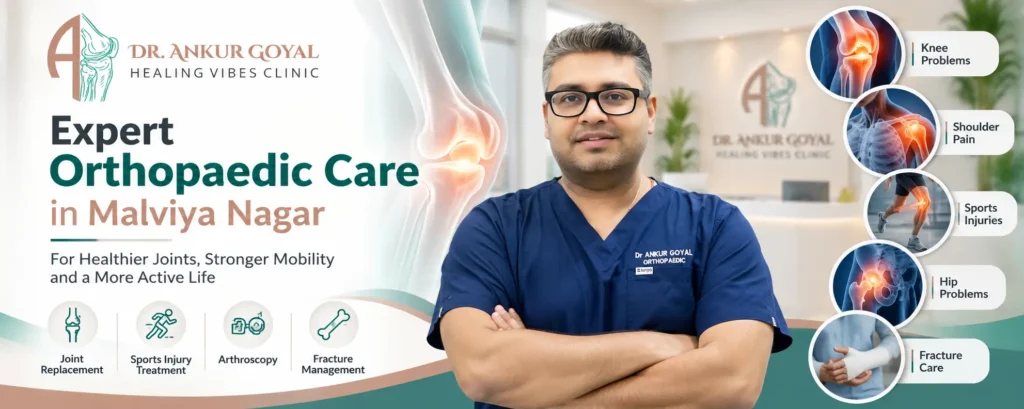
Best Orthopaedic Care in Malviya Nagar: A Guide to Bone and Joint Health
A knee that hurts every time you climb the stairs, a shoulder that feels stiff in the morning, or back and joint pain that keeps returning can gradually affect your everyday routine. You may start avoiding walks, changing the way you sit, or giving up activities you once enjoyed. When discomfort begins to interfere with daily life, it is worth understanding what is causing it rather than simply trying to manage the pain.
For people looking for the best orthopaedic care in Malviya Nagar, Delhi, choosing the right specialist involves more than comparing online ratings. The doctor’s qualifications, experience with your particular condition, treatment approach and follow-up care are all worth considering.
Dr. Ankur Goyal is an orthopaedic surgeon whose areas of practice include knee and hip conditions, joint replacement, sports injuries, arthroscopy and orthopaedic trauma. His approach includes evaluating the problem and considering suitable surgical or non-surgical options according to the patient’s needs.
This guide explains common orthopaedic conditions, when to seek medical advice and what to consider before choosing an orthopaedic specialist in Malviya Nagar.
Why Orthopaedic Care Matters
Orthopaedics focuses on conditions affecting the bones, joints, muscles, ligaments, tendons and related structures. These problems can develop gradually because of arthritis or wear and tear, or they may follow an accident, fall or sports injury.
The symptoms are not always the same. One person may experience knee stiffness after sitting for a long time, while another may have swelling following a sudden twist. Shoulder pain can make it difficult to lift an arm, and hip problems may affect walking or getting up from a chair.
An orthopaedic assessment helps identify the possible cause of these symptoms and determine whether further investigation is needed.
Depending on the condition, treatment may involve activity modification, medication prescribed by a doctor, physiotherapy, rehabilitation, injections in selected cases or surgery when clinically appropriate. The right approach depends on the diagnosis, severity of the problem and the patient’s overall health.
Common Conditions That May Need Orthopaedic Attention
1. Knee Pain and Osteoarthritis
Knee pain is a common reason people seek orthopaedic advice. It may develop because of osteoarthritis, a ligament injury, a meniscus tear or another problem affecting the joint.
Some people notice pain while walking, climbing stairs or standing for long periods. Others experience stiffness after resting or swelling following physical activity.
Treatment depends on what is causing the pain. A doctor may recommend exercises, physiotherapy, changes to daily activities or other appropriate measures. For people with advanced joint damage whose symptoms remain troublesome despite suitable non-surgical treatment, knee replacement may be considered.
If knee pain is affecting your mobility, you can learn more about knee replacement treatment options.
2. Hip Pain and Restricted Movement
Hip problems can make ordinary activities such as walking, climbing stairs, putting on shoes or getting up from a chair uncomfortable. Causes may include osteoarthritis, injury and other conditions affecting the joint.
The location and nature of the pain, together with a clinical examination, can help the doctor decide what investigations may be needed. Treatment can range from non-surgical care to hip replacement in selected patients with significant joint damage.
For more information, read about hip replacement surgery and treatment options.
3. Sports Injuries and Ligament Damage
Sports injuries do not affect only professional athletes. A sudden change of direction, an awkward landing or a collision can injure the knee, ankle, shoulder or other joints during everyday physical activity.
Pain, swelling, reduced movement or a feeling that a joint is unstable may indicate an injury that needs assessment. Continuing strenuous activity without understanding the problem may aggravate some injuries.
Treatment depends on the structure involved and the extent of the damage. Some injuries respond to rehabilitation and activity modification, while others may require a surgical procedure.
Explore the available options for sports injury treatment.
4. Meniscus Tears and Knee Injuries
The meniscus is cartilage inside the knee that helps distribute load and support joint movement. It can be injured during twisting movements, sports activities or, in some cases, through age-related changes.
Symptoms may include pain, swelling, stiffness, difficulty bending the knee or a catching sensation during movement. However, these symptoms can also occur with other knee conditions, so an examination is important.
Depending on the type of tear, the patient’s symptoms and activity requirements, treatment may involve rehabilitation or surgery in selected cases.
Read more about meniscus injury symptoms and treatment options.
5. Fractures and Orthopaedic Trauma
Falls, road accidents and other impacts can cause fractures, dislocations and injuries to the surrounding soft tissues. The appropriate treatment depends on the location and severity of the injury, whether the bone has moved out of alignment and the patient’s overall condition.
A suspected fracture should be assessed promptly. Avoid attempting to straighten a visibly deformed limb or putting unnecessary weight on the injured area.
Severe pain following an accident, an open wound over a suspected fracture, a visible deformity or new numbness requires urgent medical assessment.
Learn more about orthopaedic trauma and fracture treatment.
What Is Arthroscopy, and When May It Be Recommended?
Arthroscopy is a surgical technique in which a small camera is inserted through a small incision to examine the inside of a joint. Specialised instruments may be used during the same procedure to treat certain problems.
Depending on the diagnosis, arthroscopy may be considered for selected knee or shoulder conditions, including some meniscus injuries and ligament-related problems.
It is not suitable for every joint complaint. A specialist needs to assess the symptoms, examination findings and relevant imaging before discussing whether an arthroscopic procedure is appropriate.
You can read more about arthroscopy and joint treatment options.
How to Choose an Orthopaedic Specialist in Malviya Nagar
When searching for orthopaedic care in Malviya Nagar, it helps to focus on the factors that matter for your particular condition rather than relying on a single online ranking.
Check Qualifications and Relevant Experience
Review the doctor’s medical qualifications, specialist training and experience treating conditions similar to yours. If you have a ligament injury, for example, experience in sports injuries and arthroscopy may be relevant. For advanced arthritis, experience with joint replacement may be important.
You can review Dr. Ankur Goyal’s professional profile to learn about his listed qualifications and areas of practice.
Understand the Treatment Plan
A useful consultation should help you understand the possible diagnosis, whether further tests are necessary and which treatments may be suitable. Ask about the potential benefits, limitations and risks of the recommended approach.
Consider Non-Surgical Options Where Appropriate
Not every orthopaedic condition requires an operation. Depending on the diagnosis, a doctor may recommend physiotherapy, activity modification, rehabilitation or other conservative measures before considering surgery.
Ask About Recovery and Follow-Up
Recovery varies according to the condition and treatment. Some patients may need a short period of activity modification, while others may require a structured rehabilitation programme and several follow-up visits.
Before starting treatment, ask what recovery may involve and when you can reasonably expect to return to your usual activities.
Look for Clear Communication
You should feel comfortable discussing your symptoms and asking questions. Understanding why a treatment is recommended helps you make a more informed decision about your care.
What Happens During an Orthopaedic Consultation?
Your first appointment will generally begin with a discussion about your symptoms, when they started and how they affect your daily activities. The doctor may ask about previous injuries, existing medical conditions, medicines and treatments you have already tried.
A physical examination may be used to assess movement, tenderness, swelling, strength and joint stability. Depending on the suspected problem, the doctor may recommend an X-ray, MRI or another investigation. Not every patient needs every test.
After reviewing the findings, the doctor can discuss the likely diagnosis and possible treatment options. If surgery is being considered, ask about alternatives, potential risks, rehabilitation and the expected recovery process.
Bringing previous reports, scan results and a list of current medicines can help make the consultation more productive.
When Should You Seek Medical Attention?
Consider arranging an orthopaedic assessment if joint pain persists, swelling keeps returning, movement becomes restricted or symptoms begin affecting everyday activities. Repeated sports injuries and difficulty walking also deserve attention.
Seek urgent medical care after a serious injury, especially if you cannot bear weight, have a visible deformity or have an open wound over a suspected fracture. A limb that becomes cold, pale, numb or unusually weak also needs urgent assessment.
Do not delay emergency care while trying to arrange a routine appointment.
Orthopaedic Care in Malviya Nagar, South Delhi
People living in Malviya Nagar and nearby areas of South Delhi may look for orthopaedic advice for knee pain, hip problems, sports injuries, ligament tears and fractures.
Dr. Ankur Goyal’s practice covers several of these areas, including joint replacement, sports injuries, arthroscopy and trauma care. Reviewing the doctor’s profile and discussing your symptoms during a consultation can help you understand which treatment options may be suitable.
For appointment enquiries, visit the contact and appointment page.
The appropriate treatment and expected results vary from person to person. A medical consultation is necessary to assess your condition and determine the next steps.
Frequently Asked Questions
How do I choose the best orthopaedic doctor in Malviya Nagar?
Review the doctor’s qualifications, relevant experience, areas of practice and approach to explaining treatment options. Consider whether their experience matches your condition, and ask questions about diagnosis, treatment and follow-up care.
What conditions does an orthopaedic surgeon treat?
Orthopaedic surgeons diagnose and treat conditions affecting bones, joints, ligaments, muscles and tendons. These may include arthritis, fractures, sports injuries, ligament tears and joint problems.
Does knee pain always require knee replacement surgery?
No. Knee pain can have several causes, and many conditions can initially be managed without surgery. Knee replacement may be considered for selected patients with significant joint damage and persistent symptoms after appropriate non-surgical treatment.
When should I see a doctor for a sports injury?
Arrange an assessment if pain, swelling or restricted movement persists, or if the joint feels unstable. A severe injury, visible deformity or inability to bear weight requires prompt medical attention.
What is the difference between arthroscopy and joint replacement?
Arthroscopy uses a small camera and specialised instruments to assess or treat selected problems inside a joint. Joint replacement involves replacing damaged joint surfaces with artificial components. The appropriate procedure depends on the diagnosis and extent of joint damage.
Can orthopaedic conditions be treated without surgery?
Yes. Depending on the condition, treatment may include physiotherapy, rehabilitation, activity changes and other non-surgical measures. The right approach should be decided after an individual assessment.
Final Thoughts
Bone and joint problems can affect work, exercise, sleep and everyday independence. Persistent pain, stiffness or restricted movement deserves attention, especially when it begins to interfere with your normal routine.
If you are looking for orthopaedic care in Malviya Nagar, take time to review the doctor’s qualifications, understand your treatment options and ask questions during your consultation. A clear diagnosis and a treatment plan suited to your condition are important steps towards managing the problem.