
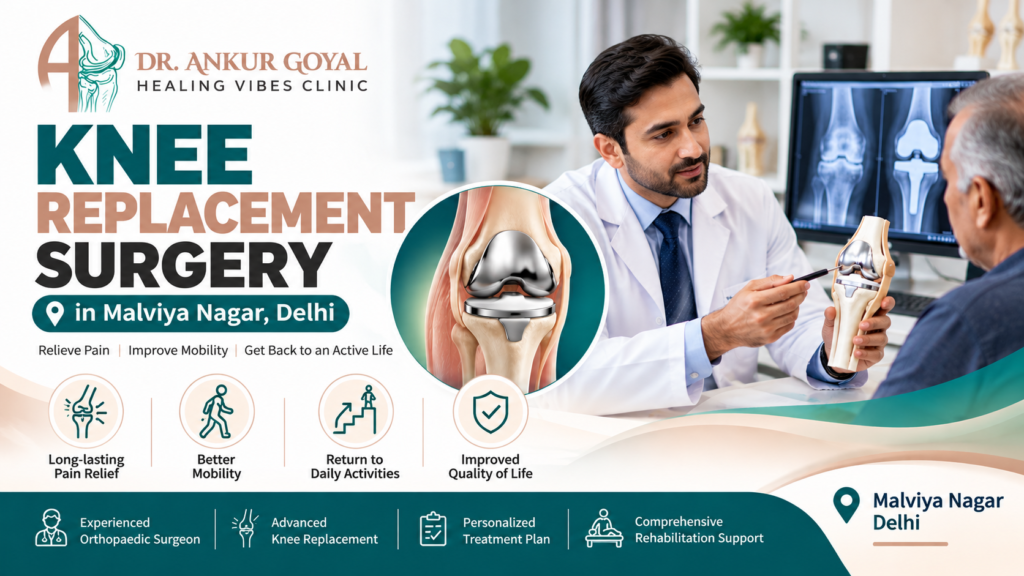
Knee Replacement Surgery: Treatment Options, Benefits and Recovery
Persistent knee pain can gradually affect almost every part of daily life. Walking short distances, climbing stairs, getting up from a chair, or sleeping comfortably may become difficult when the knee joint is severely damaged. For some people, medication, physiotherapy, lifestyle changes, and other non-surgical treatments provide relief. For others, advanced arthritis may continue to limit mobility despite these measures.
Knee replacement surgery is one treatment option for people with significant knee joint damage and persistent symptoms. The procedure replaces damaged joint surfaces with artificial components designed to improve movement and reduce pain.
If you are exploring knee replacement surgery in Malviya Nagar, it is important to understand when surgery may be appropriate, the different types of knee replacement, how recovery works, and what to discuss with an orthopaedic surgeon.
What Is Knee Replacement Surgery?
Knee replacement, also known as knee arthroplasty, is a surgical procedure used to treat severe damage to the knee joint. During surgery, damaged bone and cartilage are removed from the affected joint surfaces and replaced with artificial components.
The procedure is commonly considered for people with advanced osteoarthritis, rheumatoid arthritis, or post-traumatic arthritis when pain and mobility limitations persist despite appropriate non-surgical treatment.
The main goals are to reduce pain, improve everyday function, and help patients participate more comfortably in daily activities. The amount of improvement varies depending on the person’s health, the severity of joint damage, and rehabilitation progress.
What Are the Signs You May Need a Knee Replacement?
Not everyone with knee pain needs surgery. However, an orthopaedic assessment may be helpful when symptoms become persistent or interfere significantly with everyday activities.
Common signs include:
- Persistent knee pain: Pain continues during walking, standing, or resting.
- Difficulty climbing stairs: Bending and loading the knee become increasingly uncomfortable.
- Joint stiffness: The knee becomes difficult to bend or straighten fully.
- Swelling: Recurrent swelling or inflammation affects mobility.
- Reduced walking distance: You may need frequent breaks or support when walking.
- Sleep disturbance: Knee pain interferes with rest.
- Limited response to other treatments: Medication, physiotherapy, activity modification, or other appropriate treatments no longer provide sufficient relief.
These symptoms do not automatically mean that knee replacement is necessary. A clinical examination and appropriate imaging help determine the cause of pain and whether surgery is a reasonable option.
What Causes Knee Joint Damage?
Several conditions can damage the knee joint over time.
Osteoarthritis
Osteoarthritis is a common cause of knee joint damage. The protective cartilage gradually deteriorates, leading to pain, stiffness, and reduced movement.
Rheumatoid arthritis
This inflammatory condition can affect the lining of the joint and gradually damage cartilage and bone.
Post-traumatic arthritis
A previous fracture or serious knee injury may contribute to joint damage later in life.
Other degenerative conditions
Certain joint disorders can also cause significant cartilage loss and functional limitations.
The appropriate treatment depends on the underlying diagnosis, the extent of joint damage, and the impact of symptoms on daily life.
What Are the Different Types of Knee Replacement?
The procedure is selected according to the location and severity of joint damage.
1. Total knee replacement
In total knee replacement, the damaged joint surfaces are replaced with artificial components. It may be considered when arthritis affects multiple parts of the knee and symptoms remain severe despite appropriate treatment.
2. Partial knee replacement
A partial knee replacement treats the affected compartment of the knee while preserving the healthier parts. It may be suitable for selected patients whose damage is limited to one compartment and whose remaining ligaments and joint structures meet the necessary criteria.
3. Robotic-assisted or computer-guided knee replacement
Robotic-assisted and computer-guided techniques can help surgeons plan and execute certain aspects of the procedure. Whether such technology is appropriate depends on the individual case, available equipment, and the surgeon’s assessment. It does not guarantee a better result for every patient.
4. Revision knee replacement
Revision surgery may be needed when a previous knee replacement develops problems such as implant loosening, wear, infection, or instability. Revision procedures can be more complex than an initial replacement.
You can read more about available knee replacement treatment options on Dr. Ankur Goyal’s website.
How Is the Need for Knee Replacement Evaluated?
Before recommending surgery, an orthopaedic surgeon typically reviews symptoms, medical history, mobility, and previous treatments.
The assessment may include:
- A physical examination of knee movement, alignment, tenderness, and stability.
- X-rays to assess joint space, bone changes, and the extent of arthritis.
- Review of medications, existing medical conditions, and previous treatment.
- Discussion of daily activities, mobility goals, and expectations after surgery.
The decision should be based on symptoms and examination findings alongside imaging—not an X-ray alone.
A knee replacement specialist in Malviya Nagar or another accessible location can help assess whether the symptoms are related to advanced joint damage and explain the available options. When researching an orthopedic doctor in Malviya Nagar, patients should consider relevant surgical experience, communication, rehabilitation support, and the suitability of the proposed treatment.
What Happens During Knee Replacement Surgery?
The exact surgical technique depends on the type of replacement and the patient’s anatomy.
In general, the surgeon removes the damaged joint surfaces, prepares the bone, and places the artificial components. The components are designed to work together to provide a smoother joint surface.
Anaesthesia, pain management, and measures to reduce complications are planned according to the patient’s health and the procedure.
Before surgery, the treating team should explain the expected benefits, potential risks, alternative treatments, implant considerations, and rehabilitation requirements.
What Is Recovery Like After Knee Replacement?
Recovery is gradual and differs from person to person. Age, general health, muscle strength, the extent of surgery, and rehabilitation all influence progress.
Early recovery
Patients are generally encouraged to begin appropriate movement and supported walking as advised by the clinical team. Pain control, wound care, swelling management, and prevention of complications are important during this stage.
Physiotherapy and strengthening
A rehabilitation programme helps improve knee movement, muscle strength, balance, and walking ability. Exercises should be performed according to the treating team’s instructions.
Returning to everyday activities
Many patients gradually resume routine activities over the following weeks and months. Recovery timelines vary, and demanding activities may require additional rehabilitation.
Do not compare your progress directly with someone else’s. Follow-up appointments help the team monitor healing and adjust your rehabilitation plan.
What Are the Possible Risks of Knee Replacement?
Knee replacement is a major operation, and complications can occur. Potential risks include infection, blood clots, bleeding, stiffness, persistent pain, implant-related problems, and complications associated with anaesthesia.
The likelihood of complications depends on several factors, including medical history and the complexity of the procedure. Pre-operative evaluation, appropriate surgical planning, and following post-operative instructions can help manage these risks, although they cannot eliminate them completely.
Discuss any existing medical conditions, medications, allergies, and concerns with your treating team before surgery.
How Can You Prepare for Knee Replacement Surgery?
Preparation can help you understand the process and organise support for recovery.
Before surgery:
- Discuss your symptoms, medical history, and treatment goals with your surgeon.
- Follow instructions about medicines and pre-operative tests.
- Ask about pain control, wound care, walking aids, and physiotherapy.
- Arrange assistance at home if needed.
- Prepare a safe walking area and reduce trip hazards.
- Follow medical advice regarding nutrition, smoking, and management of existing conditions.
Do not stop prescribed medicines or begin a new exercise programme without appropriate medical advice.
Choosing an Orthopaedic Surgeon for Knee Replacement in Malviya Nagar
When comparing options for an orthopedic surgeon in Malviya Nagar, focus on factors that help you make an informed decision rather than relying on rankings alone.
Consider asking:
- What is causing my knee pain, and how advanced is the joint damage?
- Are there suitable alternatives to surgery in my case?
- Would total or partial knee replacement be more appropriate?
- What are the benefits and risks of the recommended procedure?
- What rehabilitation and follow-up will I need?
- What costs and practical arrangements should I plan for?
Dr. Ankur Goyal’s website provides information about knee replacement, hip replacement, arthroscopy, and other orthopaedic services. You can review the orthopaedic treatment services and discuss your condition during a consultation.
Patients searching for a trusted orthopedic doctor in Malviya Nagar, Delhi, should verify the clinic’s location, appointment arrangements, credentials, and the services available before visiting.
Frequently Asked Questions
1. When is knee replacement surgery recommended?
It may be recommended when severe joint damage causes persistent pain and limited mobility despite appropriate non-surgical treatments. The decision depends on symptoms, examination, imaging, overall health, and patient preferences.
2. Is knee replacement suitable for everyone with arthritis?
No. Many people with arthritis can manage symptoms without surgery. Knee replacement is generally considered when joint damage is advanced and other suitable treatments have not provided adequate relief.
3. How long does it take to recover after knee replacement?
Recovery varies. Many patients gradually improve over several weeks and months, with continued gains in strength and function. The treating team should guide activity progression and rehabilitation.
4. Is robotic knee replacement better than conventional surgery?
Robotic-assisted systems can support surgical planning and component placement, but suitability varies. The technology does not guarantee superior results for every patient, and the surgeon’s assessment remains important.
5. Can I climb stairs after knee replacement?
Many patients work towards climbing stairs safely as part of rehabilitation. The timing depends on strength, balance, pain, and the instructions provided by the physiotherapy and surgical teams.
6. Where can I learn more about knee replacement in Delhi?
Visit Dr. Ankur Goyal’s knee replacement information page to learn about the procedure and available treatment options.
Conclusion
Knee replacement surgery may help people with advanced knee joint damage when pain and mobility limitations persist despite appropriate non-surgical care. Understanding the procedure, alternatives, potential risks, and recovery requirements can help patients prepare for an informed discussion with an orthopaedic surgeon.
If knee pain is affecting your walking, sleep, or everyday activities, seek a clinical assessment to understand its cause and the treatment options that may suit your condition.
Medical disclaimer: This article is for educational purposes only and does not replace professional medical advice, diagnosis, or treatment. Individual treatment decisions should be made with a qualified healthcare professional.